
 Save
Save
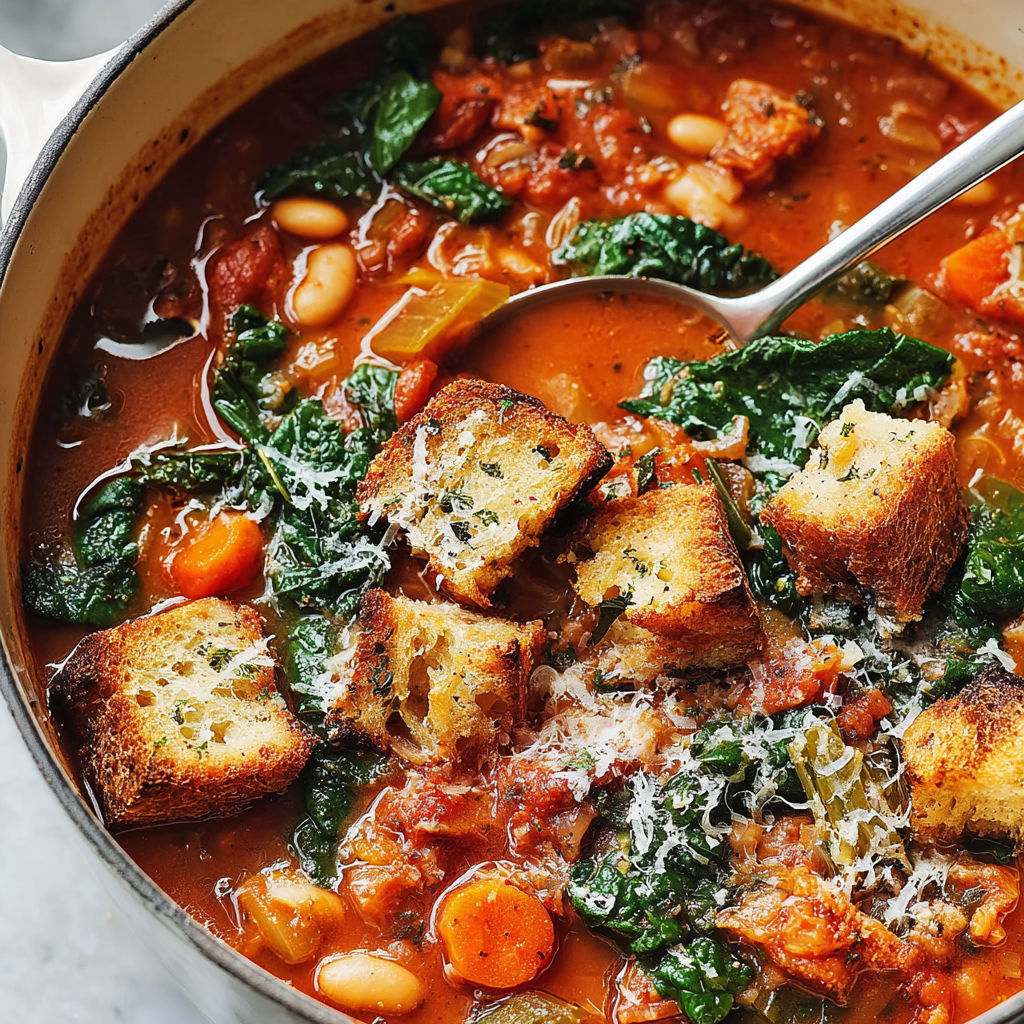
This rich and comforting ribollita soup has been a beloved dish in my family kitchen for years. It captures the essence of Tuscan cooking with layers of hearty vegetables, beans, and stale bread transforming into a thick, flavorful stew. Perfect for chilly days when you want something both nourishing and deeply satisfying.
I first tried ribollita while traveling in Tuscany and recreated it at home to share with my family. It quickly became a cozy weekend tradition, especially when the weather turns cold.
Ingredients
- Olive oil: for sautéing the vegetables which adds richness and helps build the flavor base
- Large yellow onion: chopped finely to create a natural sweetness and depth
- Carrots: chopped for subtle sweetness and vibrant color, choose firm fresh ones
- Celery ribs: chopped for aromatic earthiness and standing up well to simmering
- Garlic: minced to infuse the soup with pungent warmth and complexity
- Crushed red pepper flakes: a pinch to add a gentle kick adjust to your spice preference
- Crushed San Marzano tomatoes: for authentic Italian flavor and a balanced acidity look for good quality canned tomatoes
- Vegetable broth: to keep the soup vegetarian and add umami depth
- Fresh thyme: sprigs for a delicate fragrance and earthiness
- Chopped fresh basil: to brighten the soup towards the end of cooking
- Minced fresh rosemary: for a woody aromatic punch
- Bay leaf: adds subtle herbal complexity during simmering
- Parmesan rind: to infuse umami richness and add depth to the broth save rinds from quality cheese
- Canned cannellini beans: rinsed and drained providing creaminess and protein
- Kosher salt and black pepper: to taste enhancing all flavors
- Tuscan kale: ribs and stems removed and chopped to add texture and nutrition
- Cubed crusty Italian bread: day old or stale works best to absorb the soup’s flavors and thicken the stew
- Grated Parmesan cheese extra bread cubes and fresh basil: for optional garnishing to finish with extra flavor and texture
Instructions
- Sauté the Vegetables:
- In a large pot, heat the olive oil over medium high heat. Add the chopped onion, carrot, and celery. Cook for about 5 minutes until the vegetables become softened but not browned. This step builds the essential flavor base for the soup.
- Add Garlic and Red Pepper:
- Stir in minced garlic and crushed red pepper flakes. Cook them for 2 minutes while stirring constantly so the garlic becomes fragrant but does not burn, infusing the oil and vegetables with its flavor.
- Combine Tomatoes and Herbs:
- Pour in the crushed San Marzano tomatoes and vegetable broth. Add fresh thyme sprigs, chopped basil, minced rosemary, bay leaf, Parmesan rind, and drained cannellini beans. Season with salt and pepper to your taste. Stir everything until combined thoroughly.
- Simmer the Soup:
- Reduce heat to maintain a gentle simmer. Place the lid slightly ajar and cook for about 20 minutes or until the vegetables are tender. This slow simmer allows the flavors to meld together beautifully.
- Incorporate Kale:
- Remove the lid completely and add the chopped Tuscan kale to the pot. Stir it in so the kale starts to soften and release its nutrients into the soup.
- Add Bread and Thicken:
- Add the cubed stale bread to the soup. Simmer for another 5 minutes. During this time, the bread will absorb liquid, slightly dissolve, and thicken the soup into a hearty consistency that is signature to ribollita.
- Final Seasoning and Serve:
- Remove and discard thyme sprigs, bay leaf, and Parmesan rind from the pot. Taste the soup and adjust salt and pepper as needed. Ladle the soup into bowls, topping each with grated Parmesan, extra bread cubes, and fresh basil for an optional fresh finish.
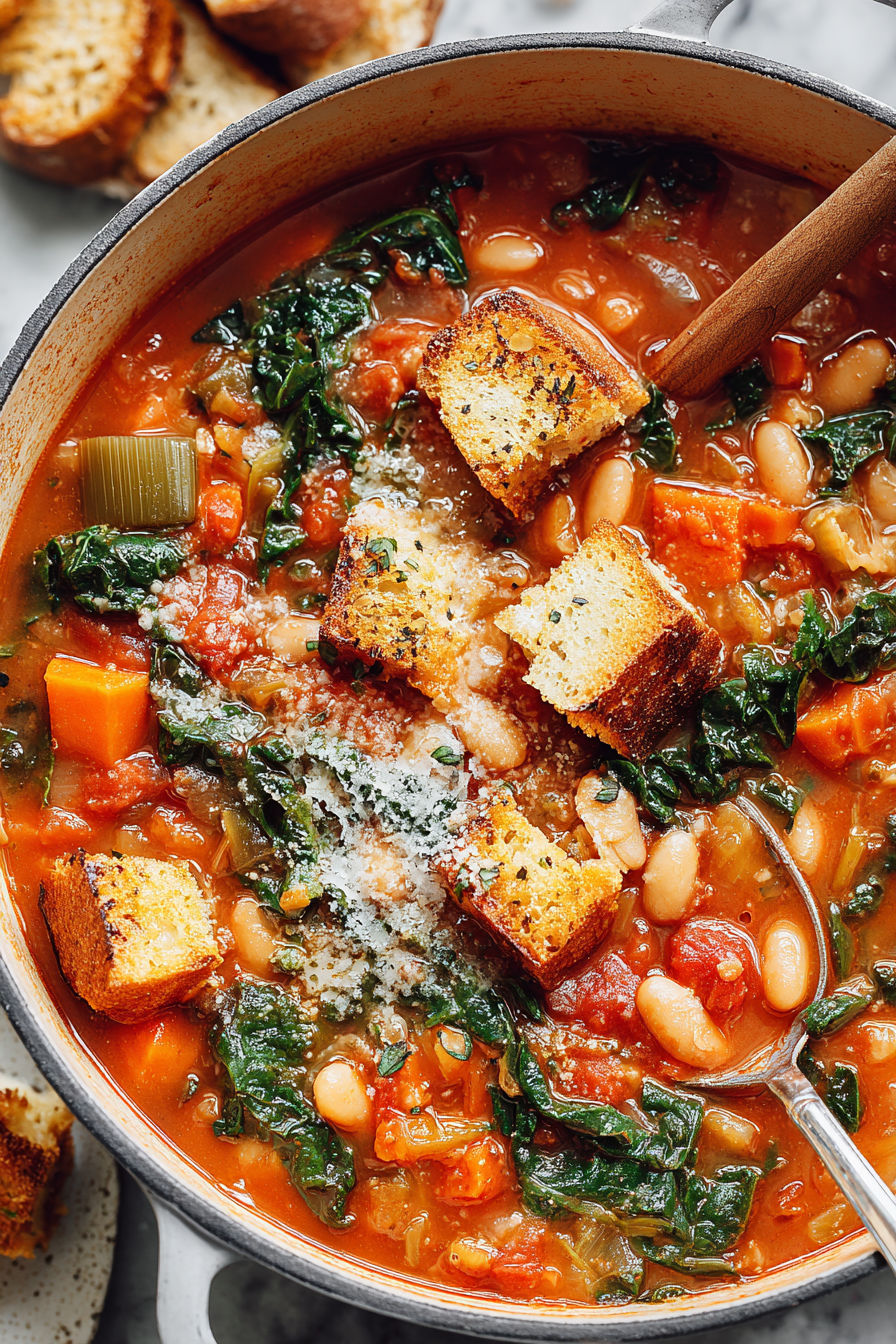
My favorite ingredient is the Parmesan rind. It quietly imparts such a creamy umami richness without overpowering, turning a simple soup into a comforting classic. Making ribollita has become a ritual in my family, reminding me of lazy Sunday afternoons with loved ones gathered around the table sharing stories and bowls of this hearty stew.
Storage Tips
Store any leftover ribollita in an airtight container in the fridge for up to 3 days. The flavors deepen over time and the bread thickens the soup further when reheated gently on the stove. Freeze in portions to enjoy later, just thaw and warm slowly to maintain texture.
Ingredient Substitutions
If you can’t find Tuscan kale, sturdy greens like cavolo nero or even Swiss chard work well. You can swap the cannellini beans for great northern beans or chickpeas for a different texture. If Parmesan rind is not available, a splash of soy sauce or miso paste added with the herbs can help deepen the umami character.
Serving Suggestions
Serve ribollita with a drizzle of high quality extra virgin olive oil and freshly grated Parmesan cheese. A crisp green salad and a glass of Italian red wine or sparkling water complete the meal beautifully. For an authentic touch, finish with fresh herb sprigs and a squeeze of lemon juice on the side.
Seasonal Adaptations
This soup is wonderful as a winter meal but can be lightened for spring by reducing the bread and increasing fresh summer vegetables like zucchini or green beans. Swap vegetable broth for chicken broth if you prefer a meat base. Add fresh tomatoes in late summer to make the soup more vibrant.
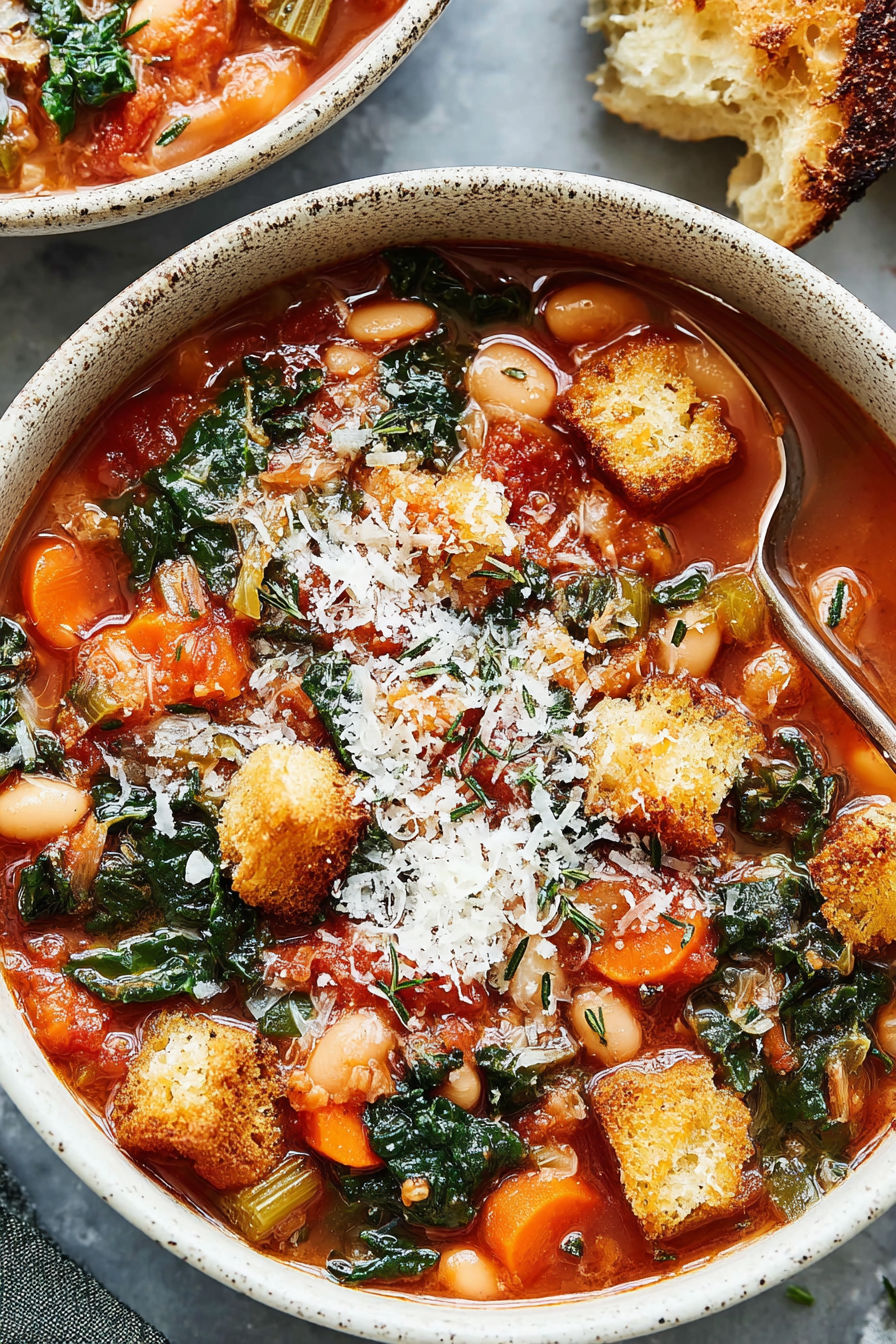
This soup is a cherished family comfort that brings warmth and satisfaction with every bowl.
FAQs about Recipes
- → What is the role of the day-old bread in the soup?
The day-old bread slowly dissolves into the soup, thickening it and lending a creamy texture without using cream or starches.
- → Can fresh kale be substituted in this dish?
Yes, fresh Tuscan kale works best, but other hearty greens like cavolo nero or even curly kale can be used for a similar earthy flavor.
- → Why is a Parmesan rind simmered with the soup?
The Parmesan rind adds depth and a subtle umami richness to the broth, enhancing the overall flavor complexity.
- → How long should the soup simmer to blend flavors?
Simmering for about 20 minutes with herbs and vegetables allows the flavors to meld, while the bread soaking for 5 minutes thickens the soup perfectly.
- → Is it necessary to remove the herbs and rind before serving?
Yes, removing thyme sprigs, bay leaf, and Parmesan rind ensures a pleasant eating experience without tough or bitter bits.