
 Save
Save
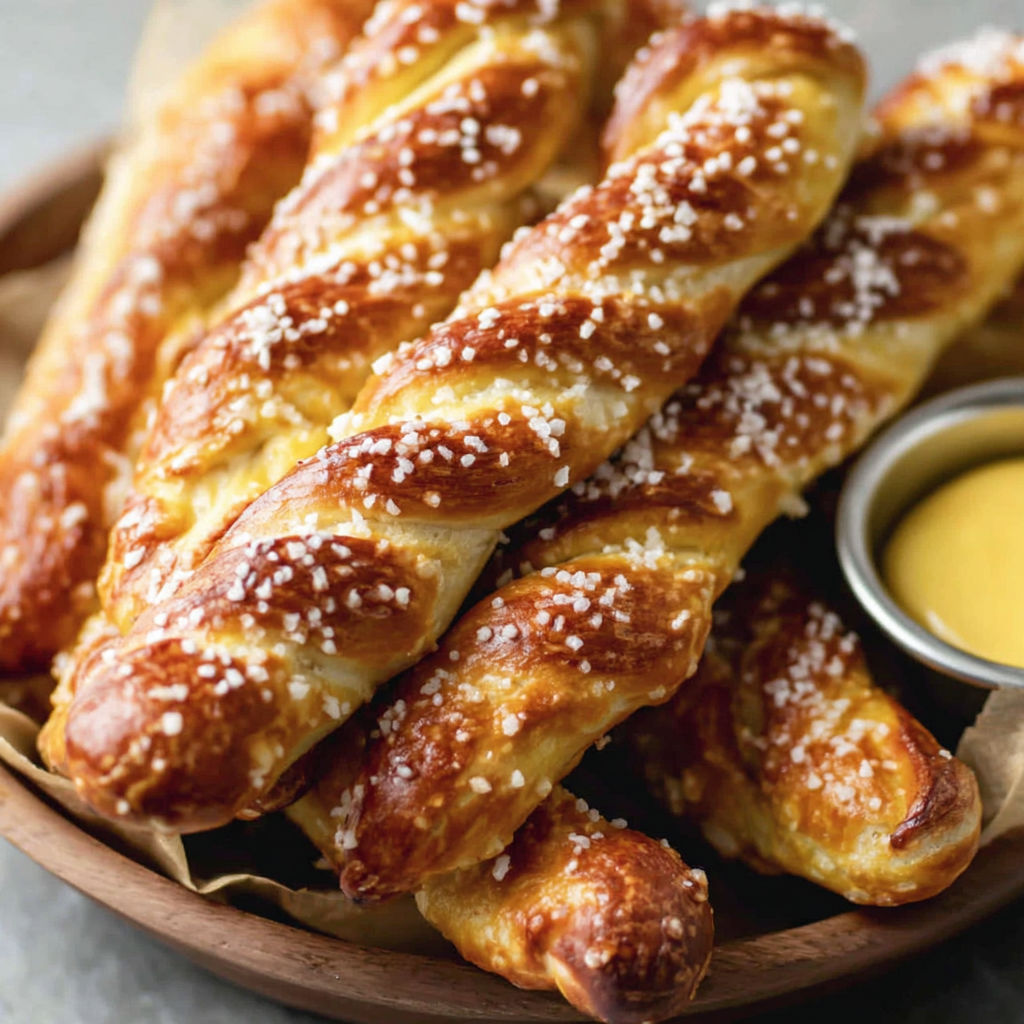
These German soft pretzel sticks bring a warm, chewy, and slightly crisp treat to your kitchen, perfect for sharing with friends or enjoying as a snack any time of day. Making them from scratch is surprisingly satisfying, and the ritual of boiling them in a baking soda bath before baking creates that unmistakable pretzel texture and flavor. This recipe has quickly become my go-to for gatherings because everyone loves the fresh, soft bite with just the right amount of salt.
I first made these on a cozy weekend afternoon and was amazed how easily they transformed basic flour and yeast into something so satisfying and delicious
Ingredients
- Light brown sugar: adds subtle sweetness to balance the saltiness and boosts yeast activation& opt for fresh sugar that is un-caked
- Warm water: at roughly 110 degrees Fahrenheit wakes up the yeast effectively& too hot or cold and the rise suffers
- Active dry yeast: enables the dough to rise properly& fresh yeast ensures a good foamy proof
- Vegetable or canola oil: helps keep the pretzels tender without overpowering flavor& choose light oils for best results
- All-purpose flour: provides the dough’s structure& sift it or at least check for lumps for better kneading results
- Baking soda: for the bath gives pretzels their signature golden crust and helps control the dough’s pH for that unique chewy texture
- Coarse sea salt: sprinkles on top add bursts of savory flavor and crunch, important to use coarse rather than fine for the best effect
- A large egg beaten with a tablespoon of water: creates an egg wash to promote even browning and a shiny finish
- Butter: for buttering the parchment paper helps prevent sticking without altering flavor
Instructions
- Activate Yeast:
- In a large mixing bowl attached to a stand mixer, combine the light brown sugar with warm water until fully dissolved to create a sweet, nutrient-rich environment for the yeast. Sprinkle the active dry yeast evenly over the surface. Let sit undisturbed for about five minutes until bubbly and foamy — this confirms the yeast is alive and ready to work.
- Prepare Dough:
- Add the vegetable oil and three cups of all-purpose flour into the yeast mixture. Using the mixer with a dough hook, gradually mix in the remaining flour while the dough comes together. Expect a slightly sticky texture at first. Knead on medium speed for about three minutes until the dough is smooth and silky to the touch. If it clings excessively, introduce up to a quarter cup more flour slowly, but be cautious not to dry the dough out.
- First Rise:
- Lightly grease a large bowl with oil and place the dough inside. Cover snugly with plastic wrap to retain warmth and moisture. Let the dough rise at room temperature for approximately 45 minutes until it doubles in size, demonstrating good fermentation and gluten development.
- Preheat and Prepare Baking Sheets:
- Set the oven to 450 degrees Fahrenheit. Line three large baking sheets with parchment paper, and then gently brush the paper with melted butter. This layer prevents sticking and adds subtle richness to the bottom crust.
- Shape Pretzel Sticks:
- Punch down the risen dough to release gas buildup. Transfer it to a floured surface and knead gently to remove air pockets. Flatten the dough slab, then divide it into 24 pieces of equal size. Roll each piece into an even stick roughly 7 to 8 inches long and about half an inch thick. Arrange the sticks spaced evenly on the baking sheets, leaving two inches between them to allow for expansion. Let them rest uncovered until slightly puffed, roughly 25 minutes.
- Prepare Baking Soda Bath:
- In a large deep skillet, bring two quarts of water mixed with three quarters cup of baking soda to a boil. Reduce heat to keep a gentle simmer. Keep one cup of hot water ready nearby to replenish the bath and maintain temperature between boiling batches.
- Boil Pretzel Sticks:
- Using two slotted spoons, carefully lower six pretzel sticks at a time into the simmering baking soda bath. Let them boil for 15 seconds, then turn and boil for 15 more seconds on the other side. This brief alkaline bath helps develop the characteristic pretzel crust. Remove sticks with spoons and drain on paper towels. Before adding the next batch, dump in a cup of hot water to restore temperature.
- Apply Egg Wash and Salt:
- Return the boiled pretzel sticks to their baking sheets, spacing them evenly. Brush the tops generously with the egg wash mixture, ensuring full coverage so they brown nicely. Sprinkle coarse sea salt over each stick to infuse that classic pretzel flavor and add texture contrast.
- Bake:
- Place the baking sheets in the preheated oven. Bake for about 10 minutes, monitoring closely toward the end. The sticks will turn a deep golden brown and develop a crisp, appealing crust.
- Serve:
- Enjoy your pretzel sticks fresh from the oven while warm or allow them to cool to room temperature. They pair beautifully with mustard, cheese dips, or simply on their own, embodying an authentic German snack vibe.
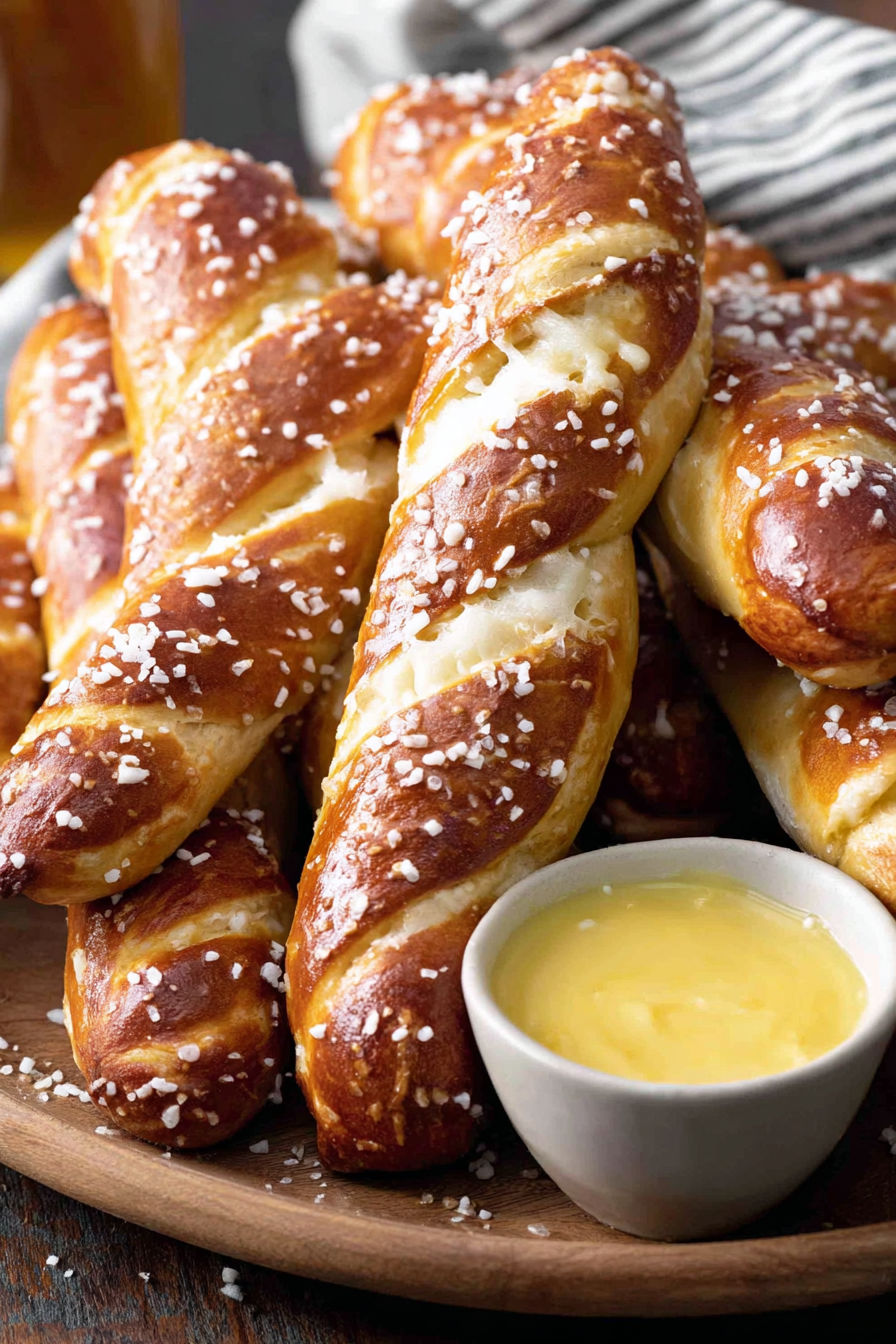
My favorite part is the magic that happens in that bath as the dough transforms — it feels like a little kitchen science experiment every time. One family weekend, my kids loved shaping the dough and testing the salty crunch, making memories over this simple recipe.
Storage Tips
Store cooled pretzel sticks in an airtight container at room temperature for up to two days. For longer storage, place them in a freezer-safe bag and freeze. When ready, thaw at room temperature and warm in the oven to regain crispness.
Ingredient Substitutions
You can swap brown sugar for white sugar if needed, but brown adds a richer flavor. Whole wheat flour can replace all-purpose flour for a nuttier, denser texture, but reduce the amount slightly as it absorbs more moisture. Olive oil can be used instead of vegetable oil but may alter the flavor slightly.
Serving Suggestions
Serve the pretzel sticks alongside mustard varieties such as honey mustard or spicy brown mustard for dipping. Pair with cheese dips like beer cheese or a cheddar fondue for extra indulgence. Add a side of sliced sausages or soft boiled eggs for a hearty snack or light meal.
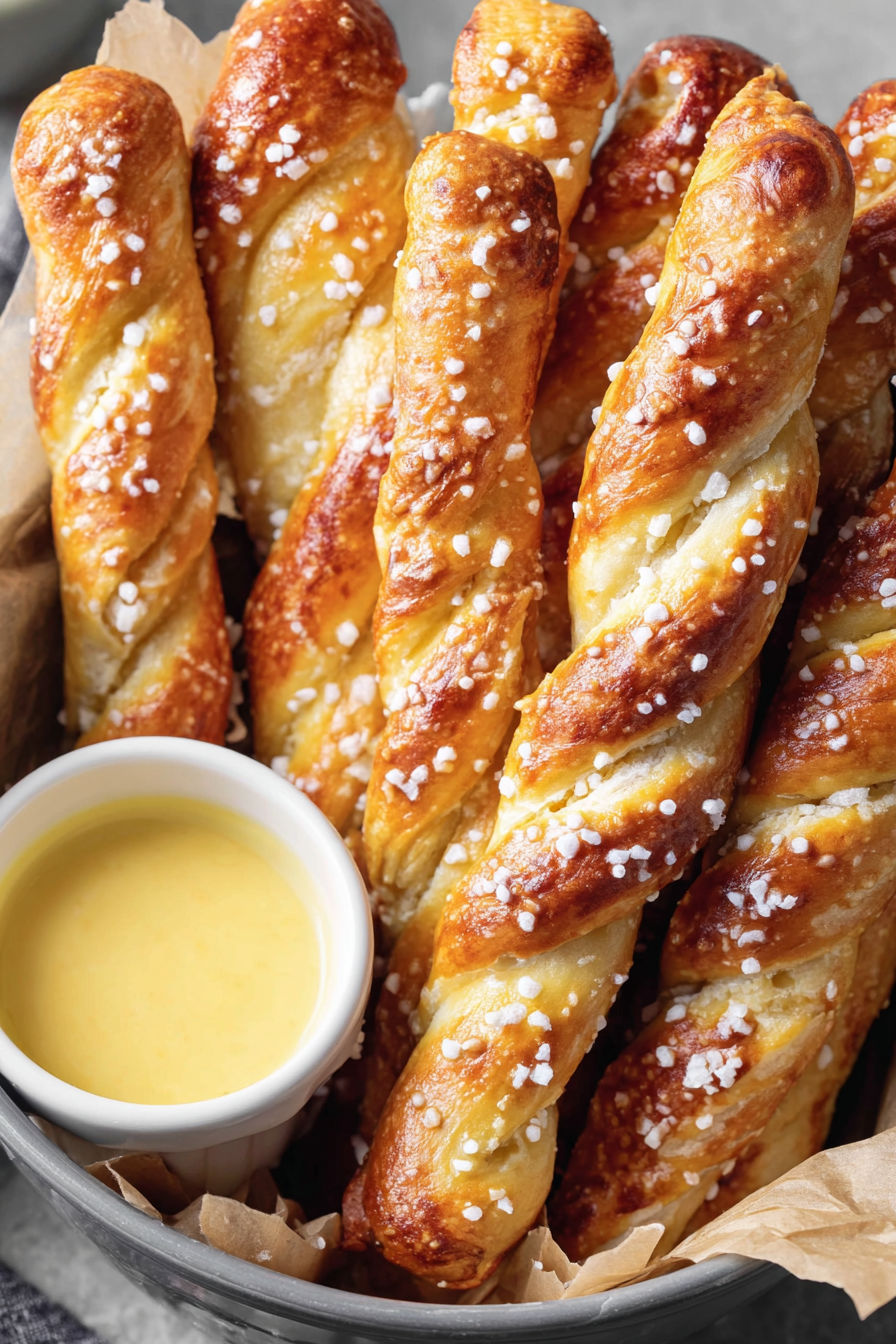
Enjoy making these pretzels as a fun kitchen project and savor the perfect blend of texture and flavor they offer.
FAQs about Recipes
- → What makes pretzels soft instead of crunchy?
Using a yeast-leavened dough with sufficient moisture and boiling briefly in a baking soda bath helps create a soft, chewy interior while developing a thin crust.
- → Why is boiling pretzels in baking soda water important?
Boiling in a baking soda solution changes the dough’s surface, allowing it to brown deeply and develop the classic chewy crust when baked.
- → Can I use different types of flour for the dough?
All-purpose flour is ideal for this dough to achieve the right balance of texture, but bread flour can be used for a chewier result.
- → How should the pretzel sticks be stored after baking?
Store in an airtight container at room temperature for up to two days. Reheat briefly to restore softness and crispness.
- → What is the purpose of the egg wash on the pretzels?
The egg wash gives the pretzels a glossy, golden finish and helps the coarse salt adhere to the surface.