
 Save
Save
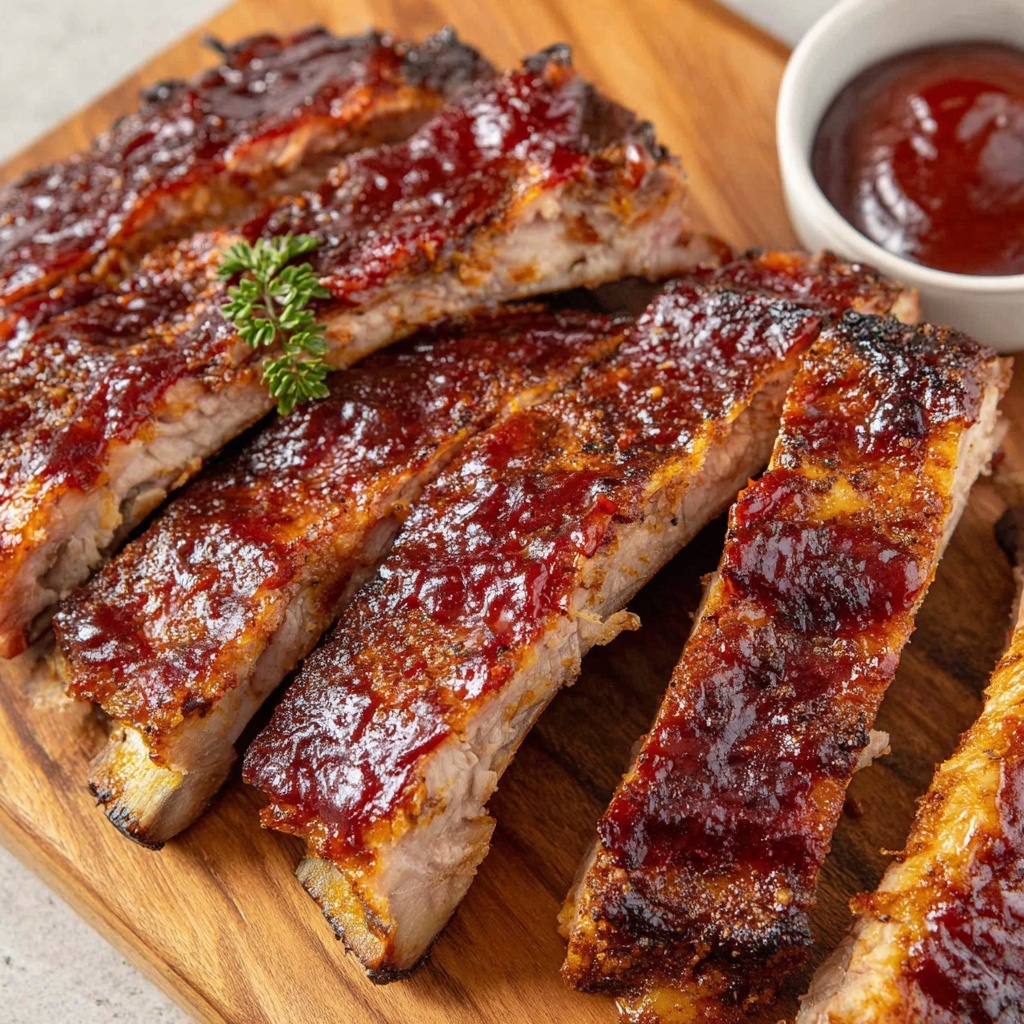
This recipe for tender, flavorful baby back ribs has become a go-to for weekend dinners and special occasions alike. Slow-baked until fall-off-the-bone, then finished under the broiler with a sticky, sweet barbecue glaze, these ribs bring a perfect balance of smoky, sweet, and savory that never fails to impress.
I first made these ribs for a summer cookout and was amazed at how simple it was to get ribs that tasted like they came from a pit smoker. Now they are my family’s favorite for gatherings and lazy weekend dinners.
Ingredients
- Baby back ribs: two and a half to three pounds rich in meat and perfect for slow roasting
- Light brown sugar: adds sweetness and helps caramelize the rub
- Granulated sugar: balances the rub and enhances crust formation
- Onion powder: offers mellow savory undertones
- Kosher salt: essential for seasoning deep into the ribs
- Smoked paprika: imparts smoky depth add more if you want stronger barbecue flavor
- Fresh cracked black pepper: brings sharpness and heat
- Ground mustard: gives a subtle tangy heat
- Cumin: provides earthy warmth
- Cayenne pepper: adds a gentle kick adjust to taste
- Ground nutmeg: contributes subtle aromatic warmth
- Barbecue sauce: use your favorite brand for glazing and finishing
- Additional light brown sugar: mixed into the sauce enhances caramelization and sweetness
Instructions
- Sauté the Aromatics:
- Preheat your oven to 300 degrees Fahrenheit. While it warms, whisk together the light brown sugars, granulated sugar, onion powder, kosher salt, smoked paprika, fresh cracked black pepper, ground mustard, cumin, cayenne pepper, and nutmeg in a small bowl until fully blended. This spice blend will tenderize the meat and build a rich foundation of flavors.
- Prepare the Ribs:
- Carefully remove the thin membrane from the underside of the ribs. Slide a small knife under a corner of the membrane and gently lift, cutting as necessary until it is loosened enough to pull off in one piece. Removing this membrane allows the spices to better penetrate the meat and keeps the ribs tender.
- Wrap and Rub:
- Tear a large piece of heavy-duty aluminum foil long enough to cover the full rack of ribs. Lay it on a baking sheet. Place the ribs bone side up on the foil and spread about one-third of the dry rub over the bones. Rub it into the bones thoroughly, then flip the ribs over. Apply the remaining rub evenly on the meaty side, massaging it to cover the surface. Seal the foil by crimping the edges tightly and folding the ends to lock in moisture during baking.
- Bake Low and Slow:
- Place the foil-wrapped ribs on the baking sheet in the oven and bake for two hours and thirty minutes at 300 degrees. This slow, gentle heat breaks down connective tissues and results in ribs that are tender and juicy.
- Broil to Finish:
- Once baked, remove the ribs from the oven and increase the oven temperature to broil. Mix the barbecue sauce with the additional brown sugar in a small bowl to create a glossy finishing glaze. Carefully open the foil and spoon the sauce mixture over the meaty side of the ribs. Return the ribs to the oven and broil for two to three minutes, watching closely until the sauce caramelizes and forms a sticky, golden crust.
- Rest and Serve:
- Remove the ribs from the oven and let them rest for ten minutes inside the foil. This resting step helps the juices redistribute, ensuring every bite is flavorful and moist. Separate the ribs and serve while warm.
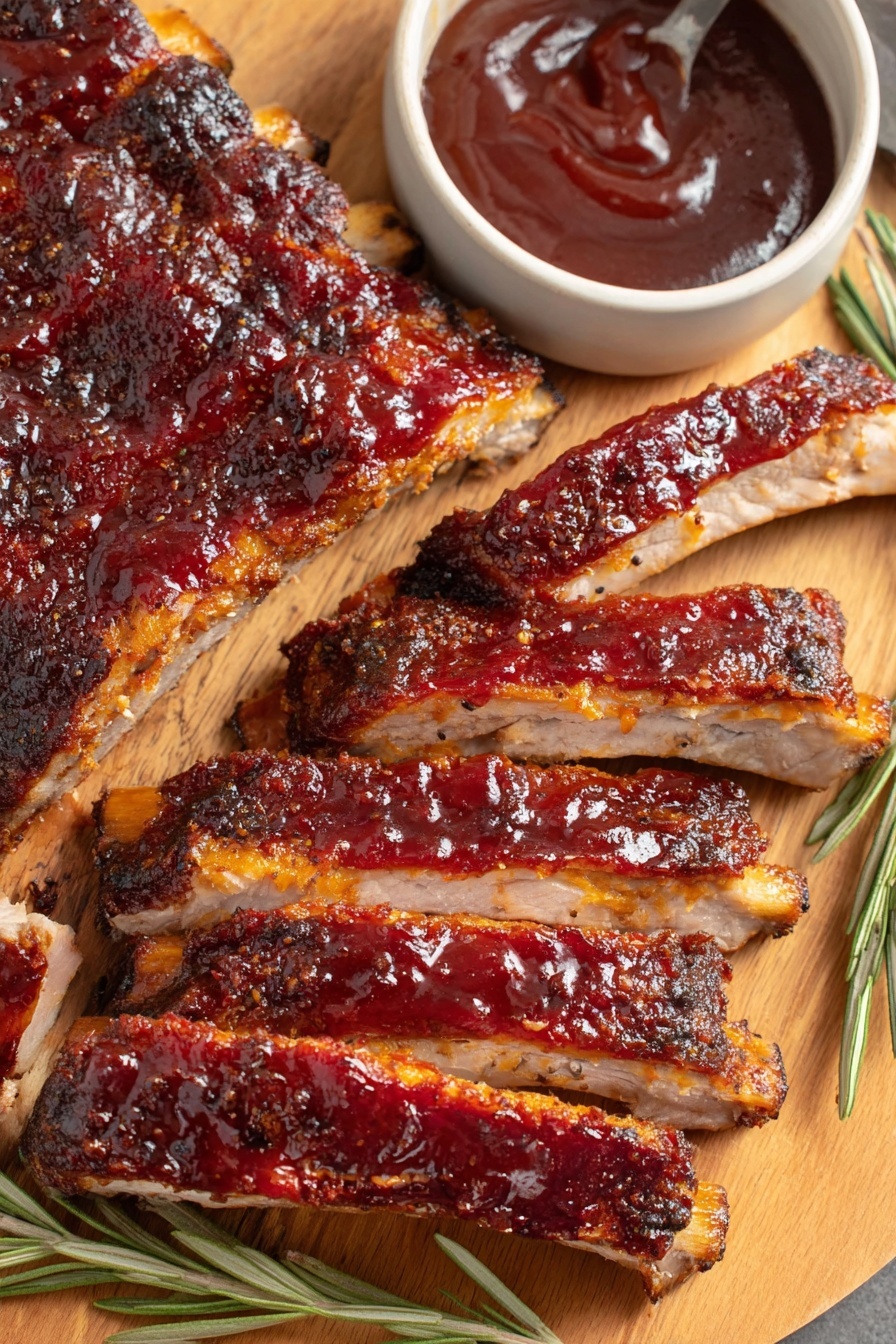
I adore smoked paprika in this rub because it brings a subtle campfire flavor that makes these ribs feel like a backyard barbecue no matter the season. A favorite family memory is watching my kids race to the table as soon as the caramelized sauce started bubbling under the broiler knowing ribs night meant smiles all around.
Storage Tips
Leftover ribs keep well wrapped tightly in the refrigerator for three to four days. To prevent drying out, wrap in foil or place in an airtight container. Reheat gently in the oven at a low temperature to retain tenderness.
Ingredient Substitutions
Pork spare ribs can be used but they will take longer to cook and have more fat. If you prefer a milder rub, reduce the cayenne pepper or omit the nutmeg which adds unexpected warmth. Use honey or maple syrup in place of brown sugar for a different sweet note in the sauce.
Serving Suggestions
These ribs pair beautifully with classic coleslaw, baked beans, or roasted corn on the cob. For a fresh contrast, serve with a simple green salad tossed in a tangy vinaigrette. Leftover ribs also make excellent sandwiches with pickles and extra barbecue sauce.
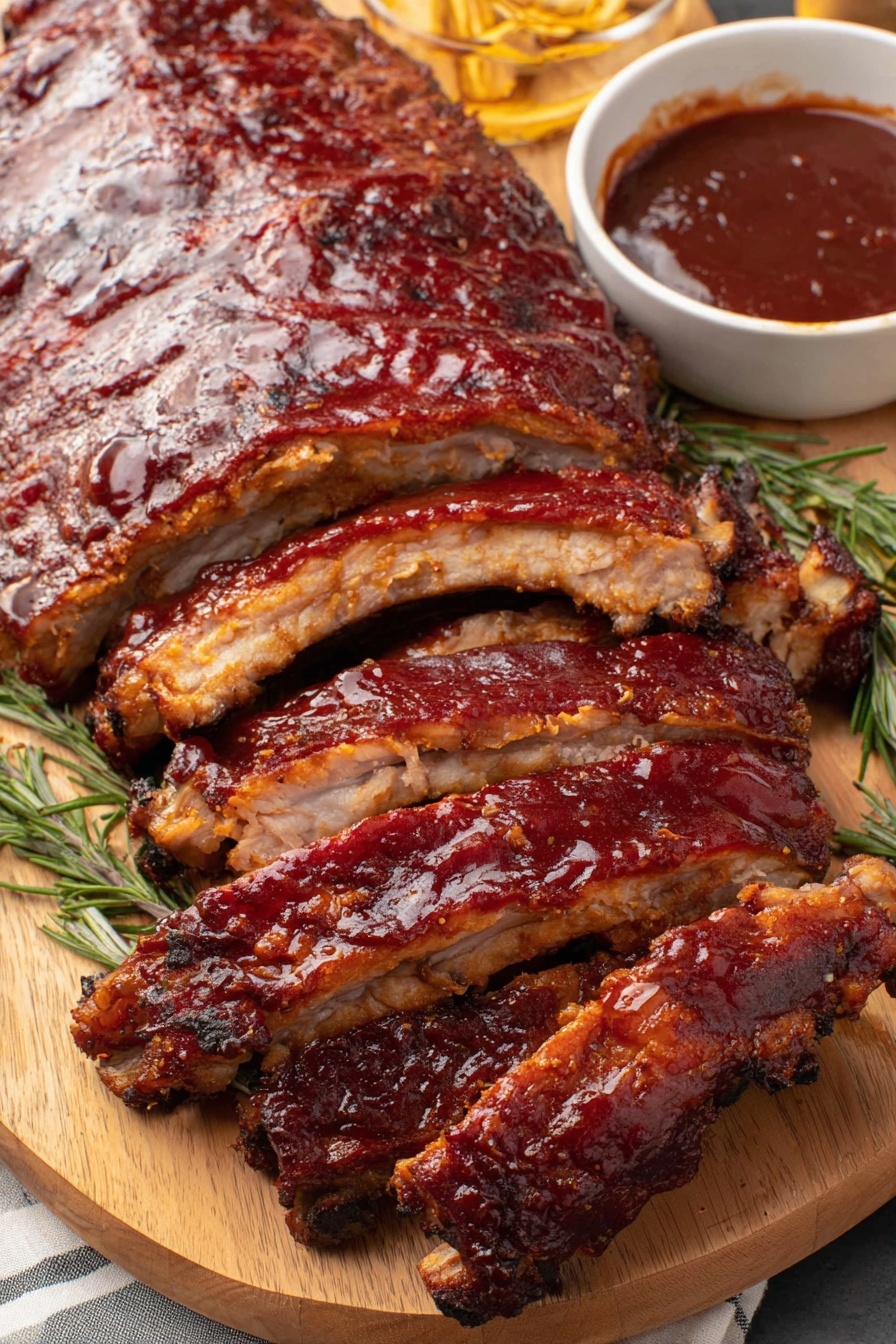
This rib recipe delivers unforgettable flavor and tenderness every time making it perfect for any occasion or gathering.
FAQs about Recipes
- → How do I remove the membrane from ribs?
Use a small knife to lift the membrane edge, then carefully slide the knife underneath while lifting. Once loosened, use your fingers to pull it off completely for more tender ribs.
- → What is the purpose of the dry rub?
The dry rub combines spices and sugars that enhance flavor and create a smoky, slightly sweet crust during slow baking.
- → Why bake ribs wrapped in foil?
Wrapping ribs in foil traps moisture, ensuring the meat cooks evenly and stays juicy throughout the slow-baking process.
- → How long should ribs rest after cooking?
Allow ribs to rest for about 10 minutes after removing from the oven to let the juices redistribute and improve tenderness.
- → Can I adjust the spice level in the rub?
Yes, you can increase or decrease ingredients like cayenne pepper to suit your preferred heat level.